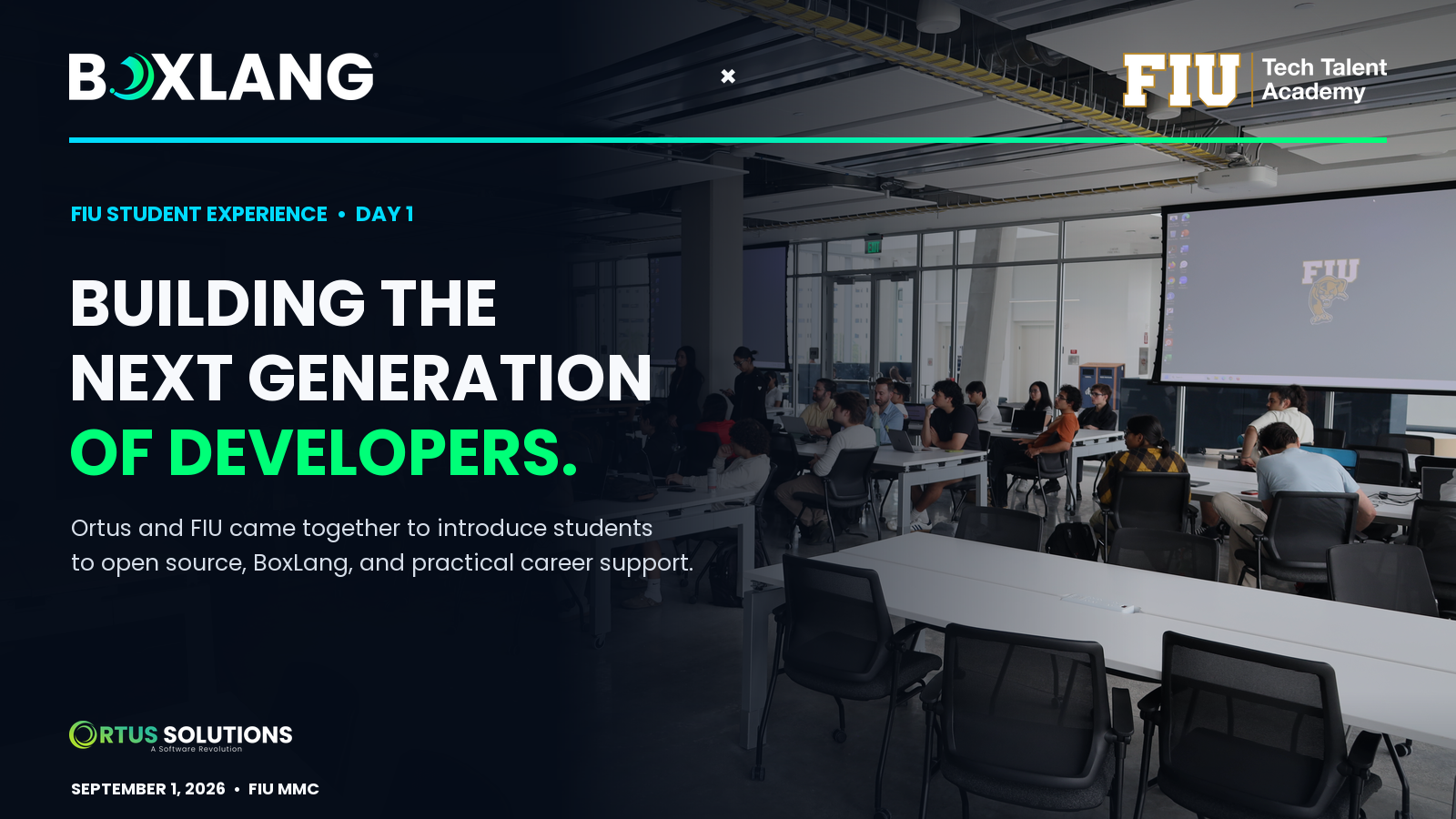
BoxLang at Florida International University: Building the Next Generation of Modern Developers!
 Maria Jose Herrera |
September
02,
2026
 Maria Jose Herrera |
September
02,
2026
 Luis Majano |
September
02,
2026
BoxLang has always been an extensible language. As of 1.17.0, it is a hierarchically extensible one. Modules can now contain other modules; aka Module Inception. Recursively. To any depth. Each nested module gets its own class loader, chained to its parent's, and BoxLang's own ModuleService discovers, registers, activates, and unloads that entire tree itself. No package manager. No build tool. No install ordering. Drop in one artifact and everything it depends on comes with it, already wired up and already isolated. Not only that, you can now package modules into a single jar.
Luis Majano |
September
01,
2026
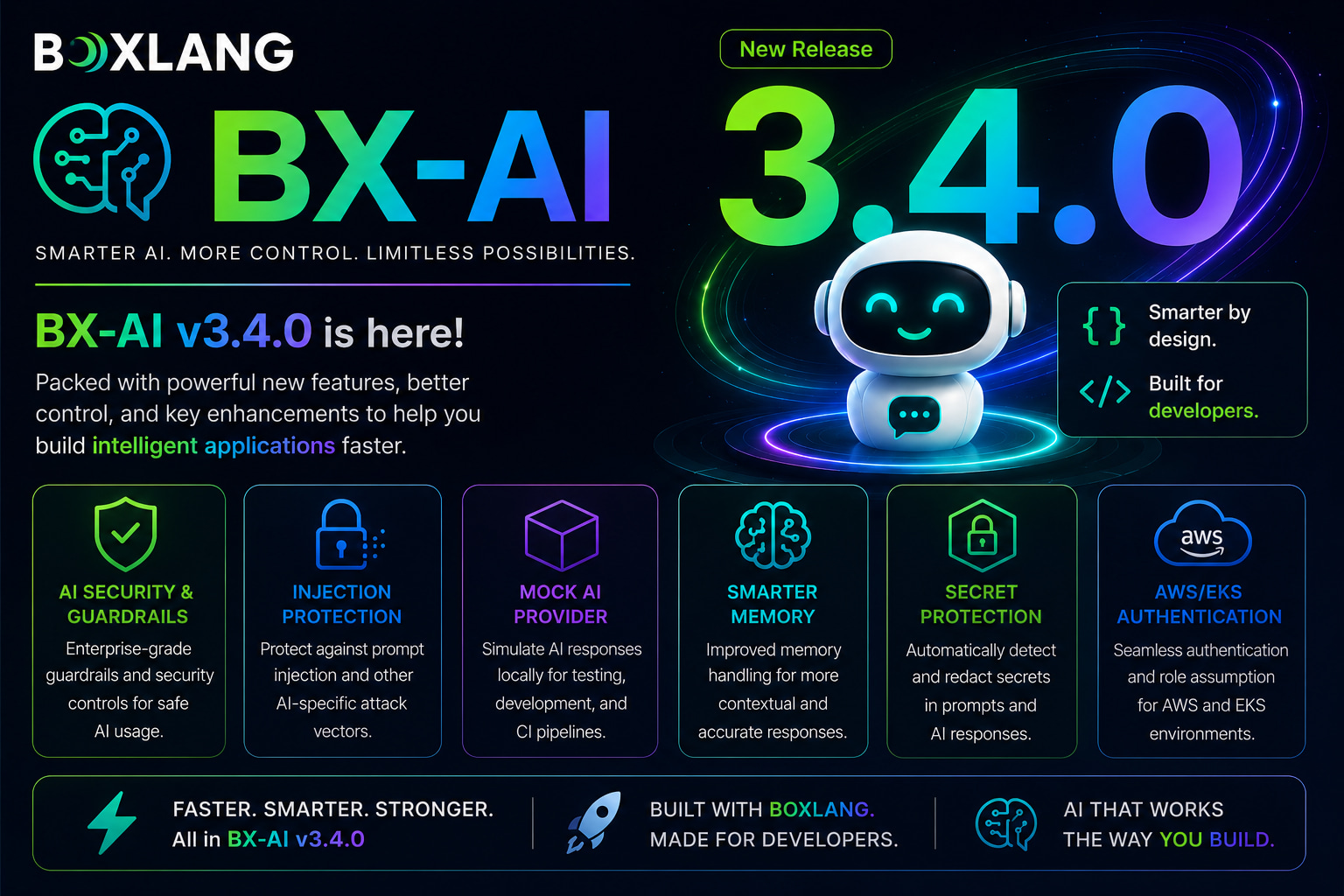
BoxLang AI 3.4.0 is one of the biggest releases in the module's history, and it is built around a single theme: trust. Every agent you ship eventually needs a human to step in, and every agent that reads untrusted content is a target for prompt injection. This release gives you both a proper answer.
 Victor Campos |
August
31,
2026
bx-toml: Native TOML Support for BoxLang
This post introduces bx-toml 1.0.0, a new BoxLang module providing native TOML parsing and serialization. It ad...
Maria Jose Herrera |
August
24,
2026
Connecting an application to an AI model is easy enough to demonstrate. The harder question is what happen...
Maria Jose Herrera |
August
20,
2026
Open source should give developers freedom not push them into a corner when an application becomes successful.
That principle shaped one of the most important segments of the Into the Box 2026 Day 1 keynote: the continued evolution of BoxLang+, BoxLang++, and the growing ecosystem of professional modules surrounding the language.
Victor Campos |
August
18,
2026
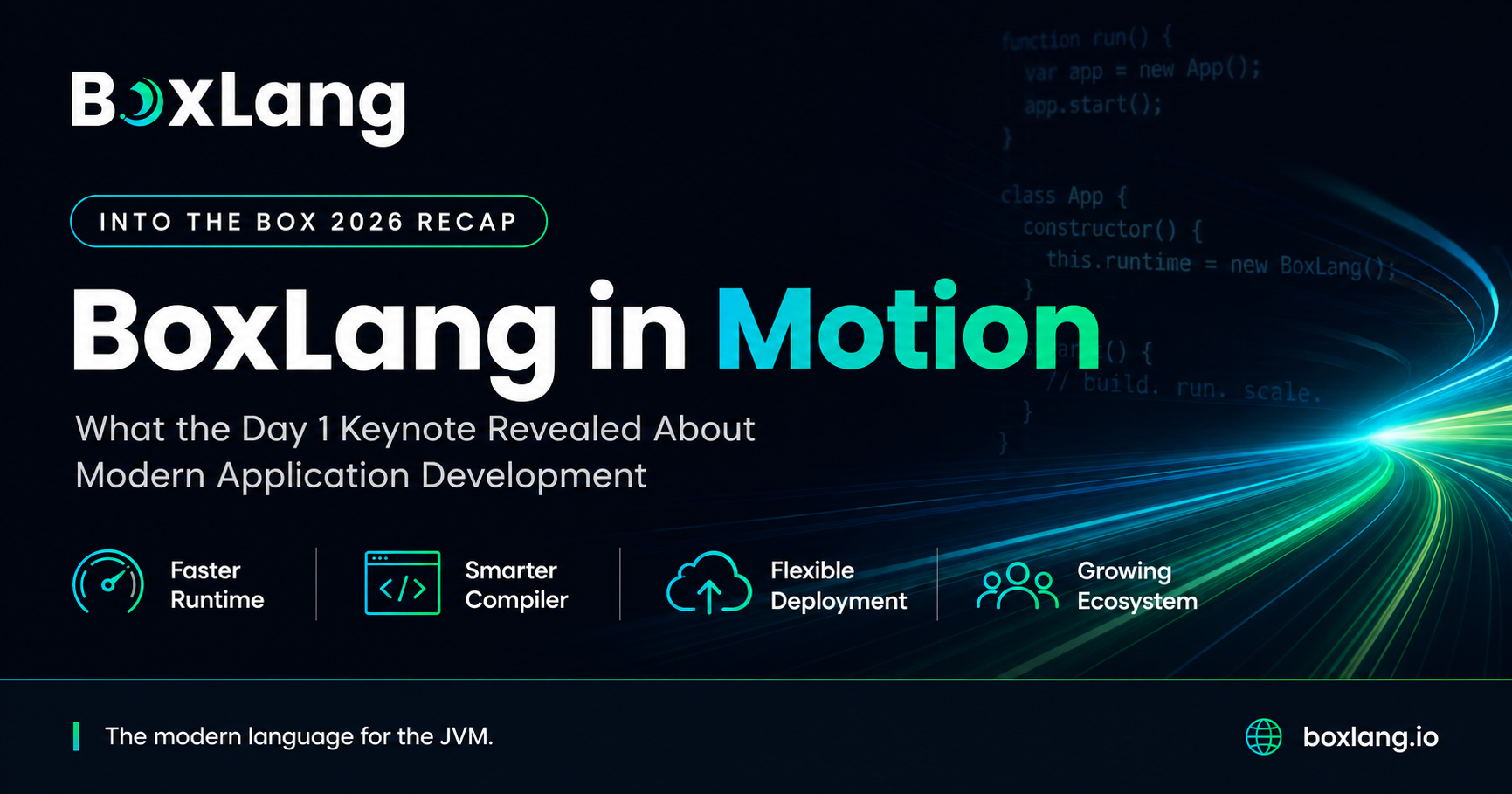
The Day 1 keynote at Into the Box 2026 was not simply a list of new BoxLang features.
It showed what happens when a language, compiler, runtime, deployment model, and developer ecosystem evolve together around one goal: helping teams build modern applications without unnecessary complexity.
Luis Majano |
August
14,
2026
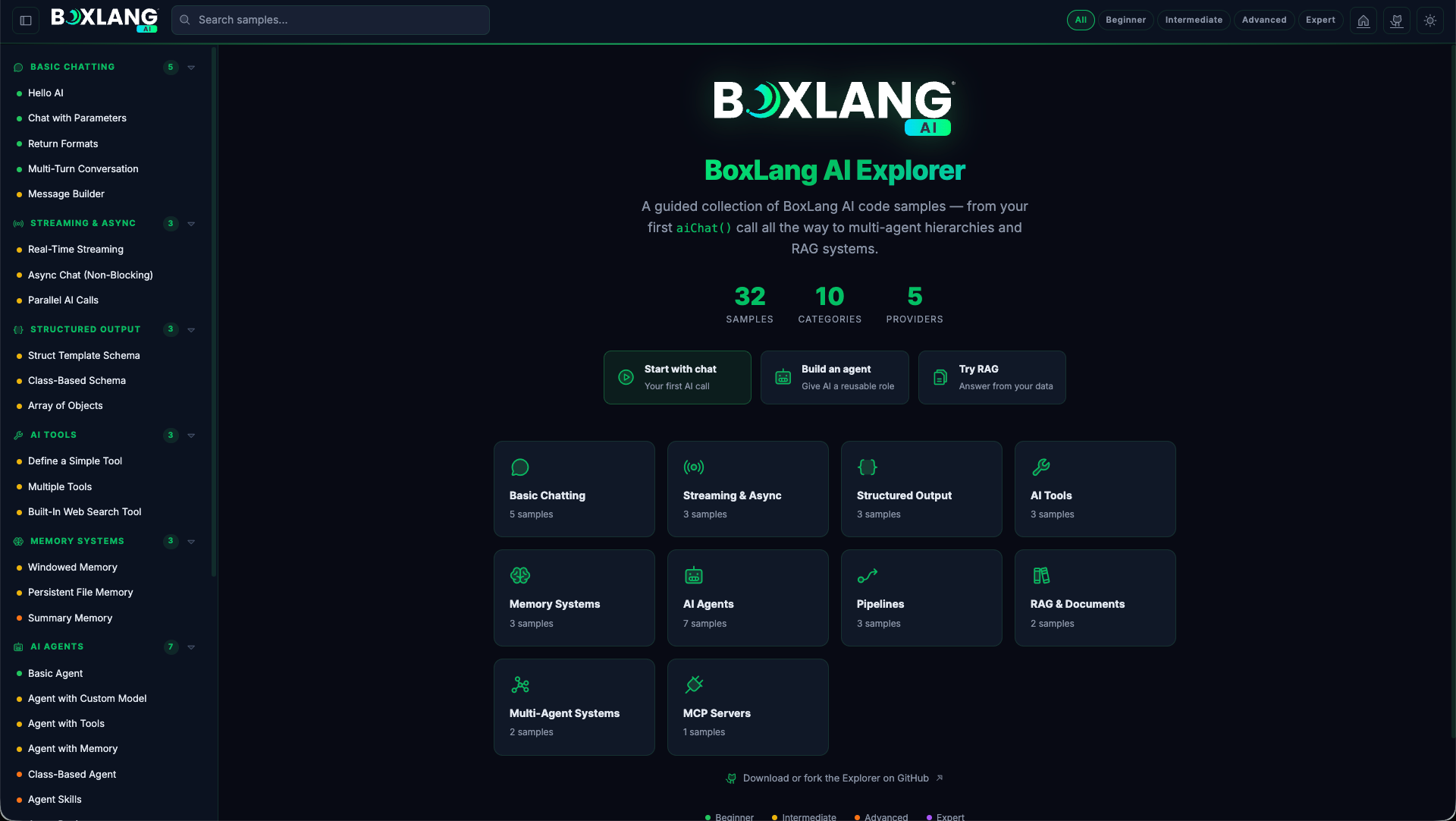
Learning a new AI API usually means jumping between scattered documentation pages, guessing at imports, and copy-pasting code that may or may not still work. We wanted something better for BoxLang AI, so we built the BoxLang AI Explorer: a local, browser-based catalog of runnable BoxLang AI examples, organized by category and difficulty, each with guidance, source code, and sample output.
Maria Jose Herrera |
August
13,
2026
The future of software development depends on more than the technologies we use. It depends on the people who learn to use them, improve them, challenge assumptions, and apply them to real-world problems.
Luis Majano |
August
12,
2026
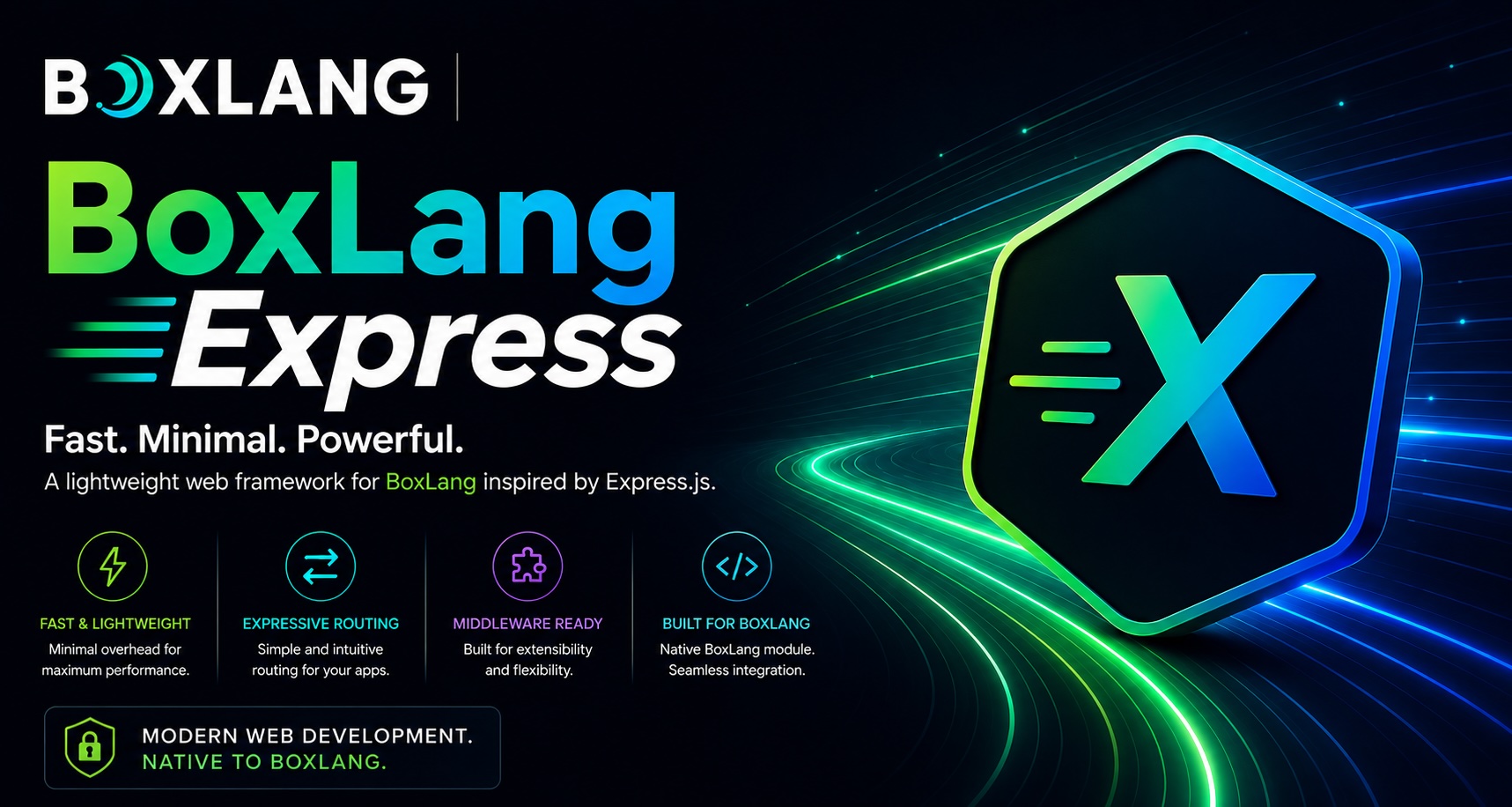
If you've spent years in Spring Boot, Micronaut, or Jakarta EE, "web framework" usually means a servlet container, an embedded Tomcat or Netty, a build step, and a fat jar before anything answers a request. What if you could skip all of that and still be on the JVM?