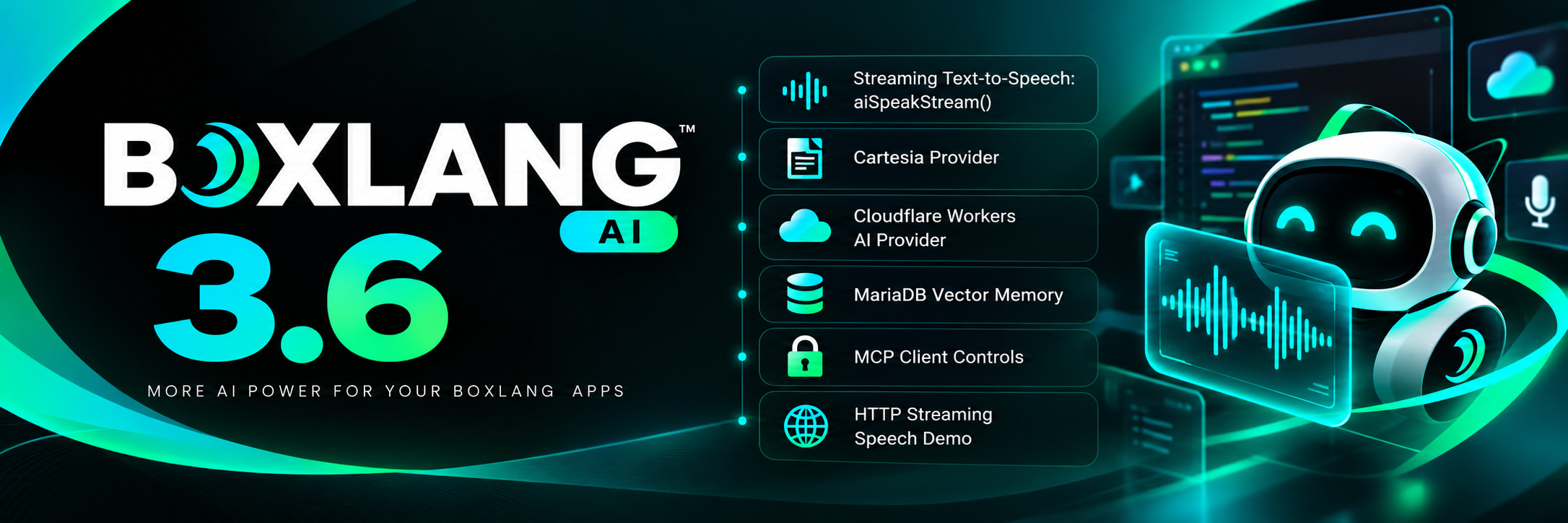
Ortus Solutions today announces BoxLang AI 3.6, the release that connects the AI framework to the rest of the BoxLang productivity platform. Your agents can now drive a real browser via bx-playwright, speak and master audio via bx-audio, stream text-to-speech token by token, talk to any MCP server over stdio — and do all of it with the same fluent BoxLang syntax they always have.
Blog
QR Codes Come to BoxLang Images
 Luis Majano |
October
14,
2026
Luis Majano |
October
14,
2026

The bx-image module can now generate and read QR codes. Two new functions, a string member function, and two new bx:image actions. No extra dependencies for you to manage.
CBSecurity 3.9: 12 Security Middleware for ColdBox, Declared Right on the Route
Luis Majano |
October
13,
2026
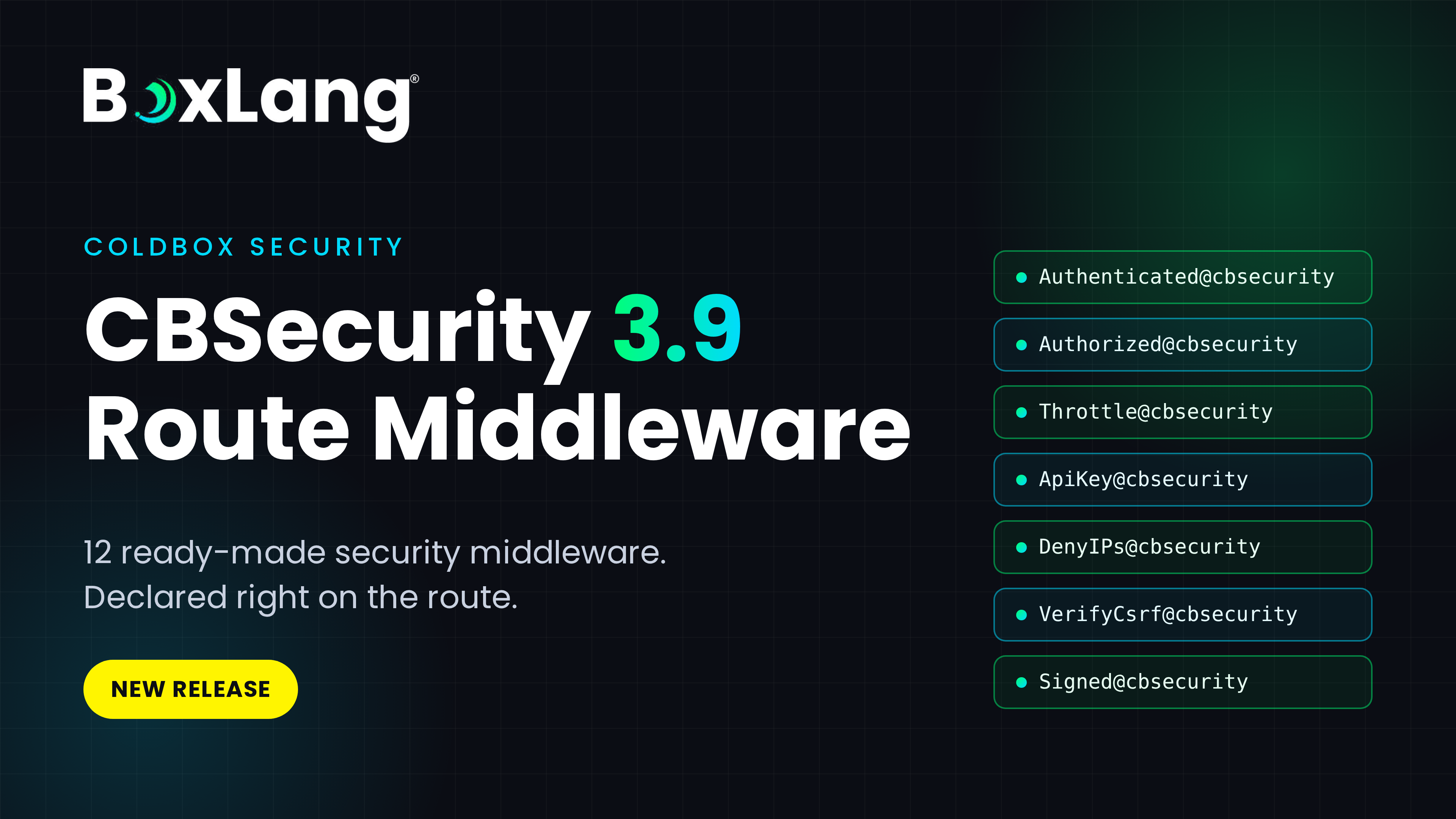
Ortus Solutions today announces CBSecurity 3.9, a major step forward for securing ColdBox applications. This release adds 12 ready-made security middleware that you attach directly to routes and route groups, with no firewall rules required.
ColdBox 8.3.0 Test and Render Your App with a Real Browser
Luis Majano |
October
13,
2026
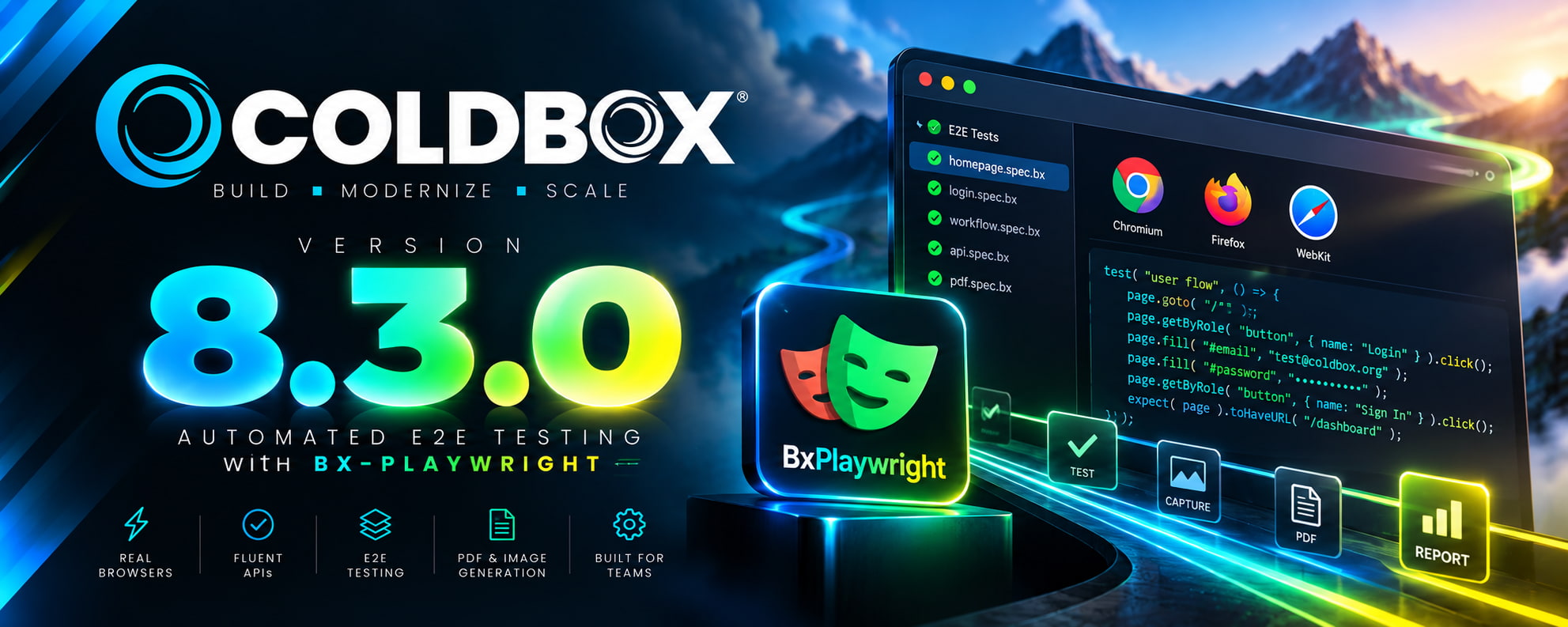
Ortus Solutions today announces the general availability of ColdBox 8.3, a feature release focused on real-browser testing and route composition. Annotate a BaseTestCase spec with @browser and drive a real browser against your running ColdBox application, with named route helpers that know your routes. And with the Playwright driver behind it, the same browser can render PDFs and screenshots of your ColdBox views. This release also brings named route middleware with registerMiddleware(), route metadata shared by a whole group(), integration tests that run route middleware like a real request, and thread-safe WireBox scope wiring.
TestBox 7.2 Real Browser Testing, Smarter Reports, and Agent-Ready Results
Luis Majano |
October
13,
2026
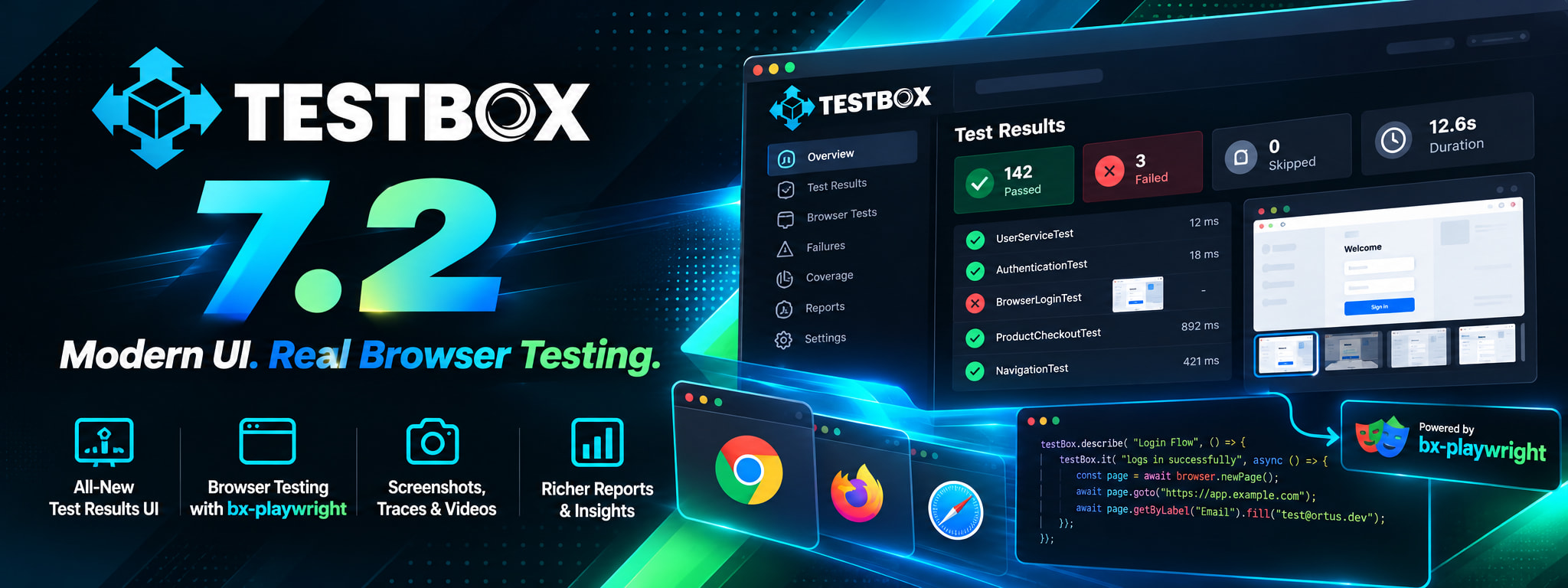
Ortus Solutions today announces the general availability of TestBox 7.2, the biggest TestBox release in years. Built on the new bx-playwright 1.0 module, BoxLang specs can now drive a real browser, assert with web-first matchers that wait until they pass, and keep the screenshots, traces and videos of every failure. Around it, TestBox gains spec retries, a Run Failed option, a rebuilt set of HTML reporters with Ask AI on every failure, and a new Agent reporter that lets AI agents read a test run at minimal token cost.
BxPlaywright 1.0: Real Browsers, Fluent BoxLang, Built for AI Agents
Luis Majano |
October
13,
2026
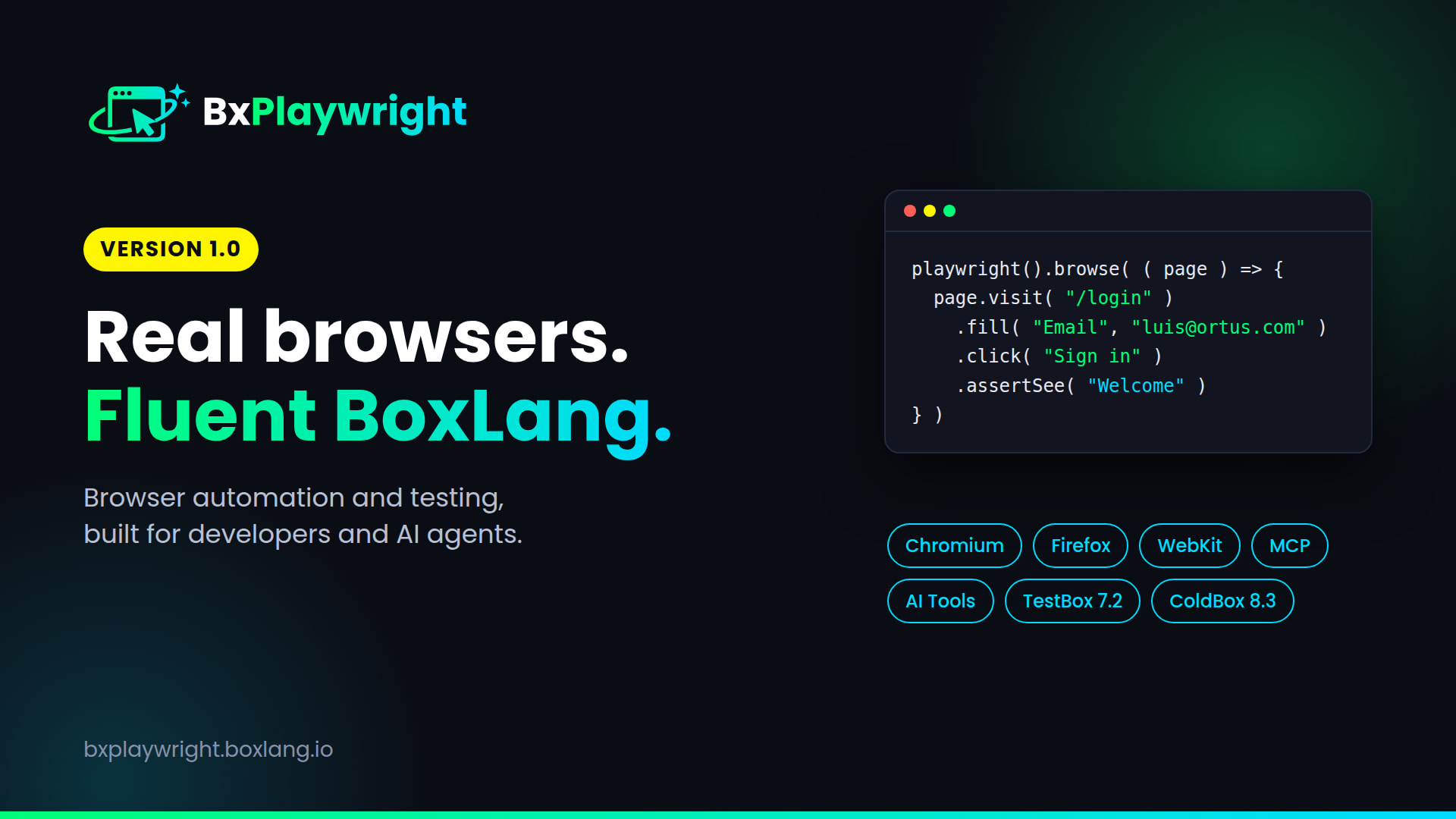
Ortus Solutions today announces the general availability of bx-playwright 1.0, fluent browser automation and testing for BoxLang, powered by Microsoft Playwright. It ships alongside TestBox 7.2 and ColdBox 8.3, which bring real-browser testing straight into your specs. Drive Chromium, Firefox and WebKit, test full user journeys, render PDFs and images, and give your AI agents a real browser to verify the BoxLang applications they build.
BoxLang for Sublime Text Released
Luis Majano |
October
08,
2026
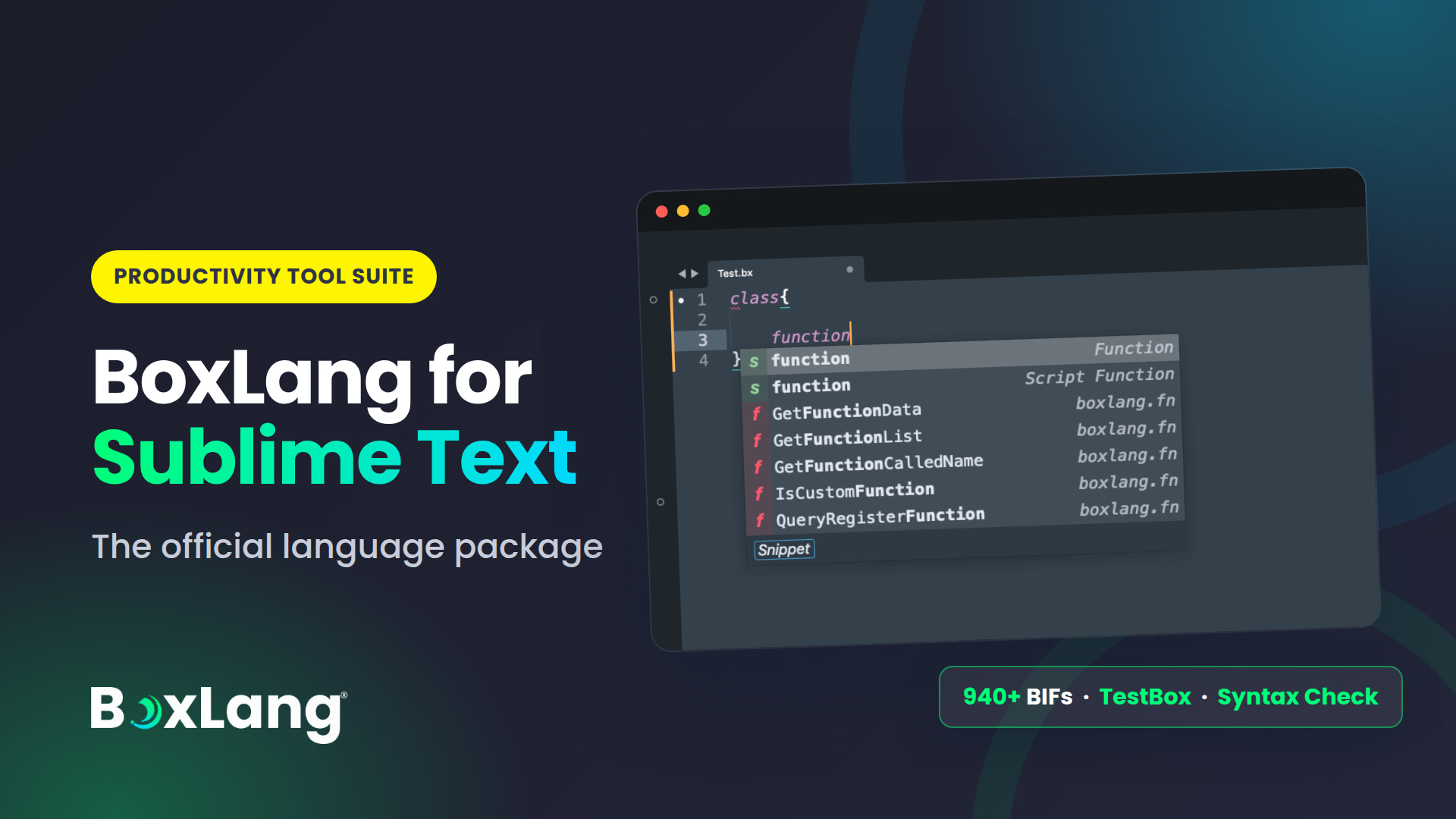
Ortus Solutions today announces the official release of the BoxLang package for Sublime Text 4, the newest member of the BoxLang productivity tool suite.
RuleBox 2.0 : a natural-language rules engine for BoxLang and ColdBox
Luis Majano |
October
07,
2026
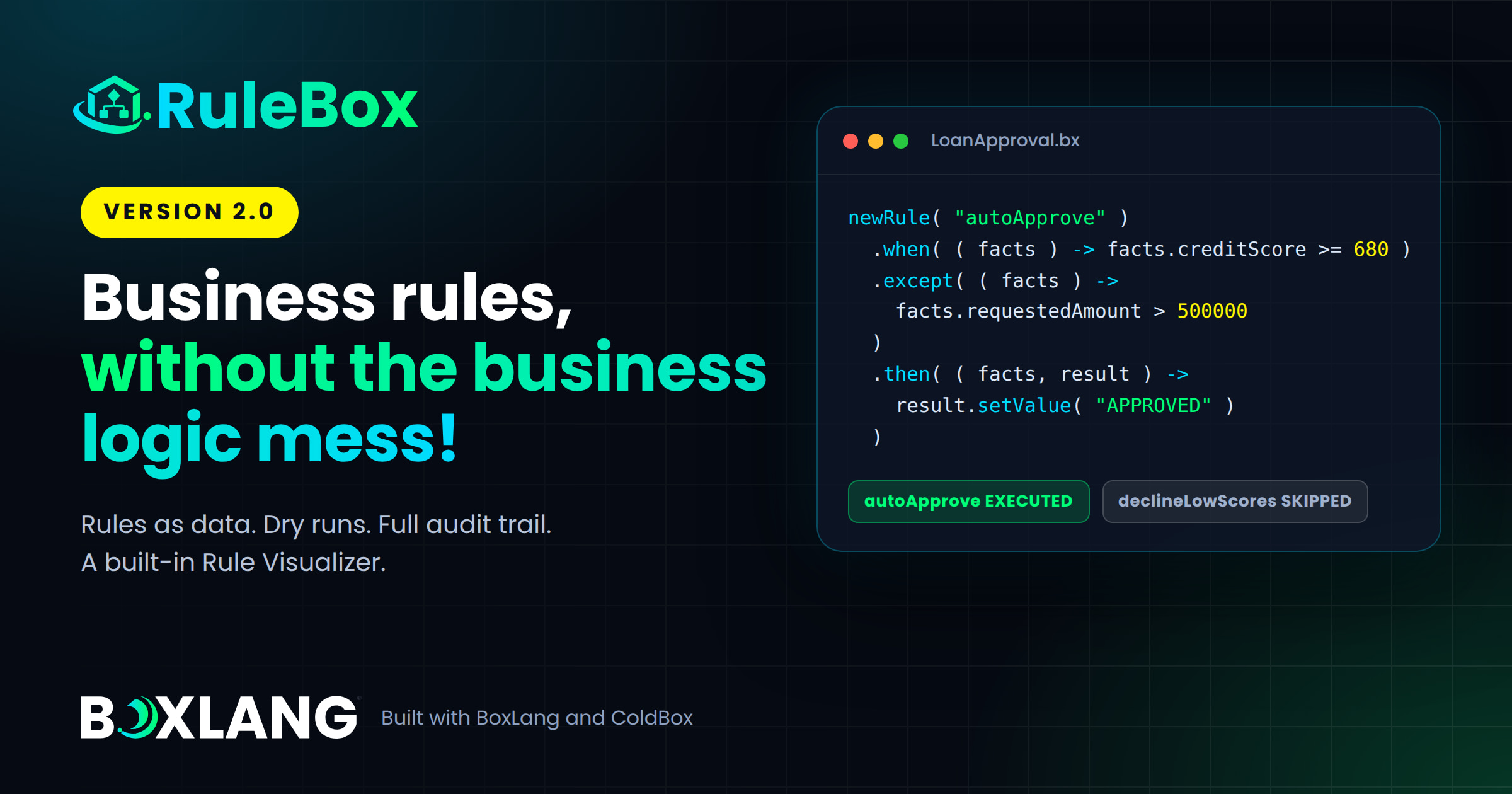
Ortus Solutions today announces the general availability of RuleBox 2.0.0, a modern, natural-language rules engine for BoxLang and ColdBox applications. It is a BoxLang-only rewrite, and it ships with rules as data, declared rulebooks, dry runs, an audit trail, and a built-in Rule Visualizer.
BoxLang 1.18.0 Released : Every Cloud, Every Node, Every Agent
Luis Majano |
October
02,
2026
Azure joins the serverless family. Scheduled tasks become cluster-safe. And the whole platform gets documentation and skills built for developers and AI agents working side by side.
If you run a technology organization, you are being asked to do three things at once: ship faster, keep the estate you already have running, and make AI part of how your teams work. Most stacks make you choose. BoxLang 1.18 is another step toward not having to.
ColdBox 8.2 Deep Dive, Part 4 of 5 : AI Routing and Gateways
Luis Majano |
October
02,
2026
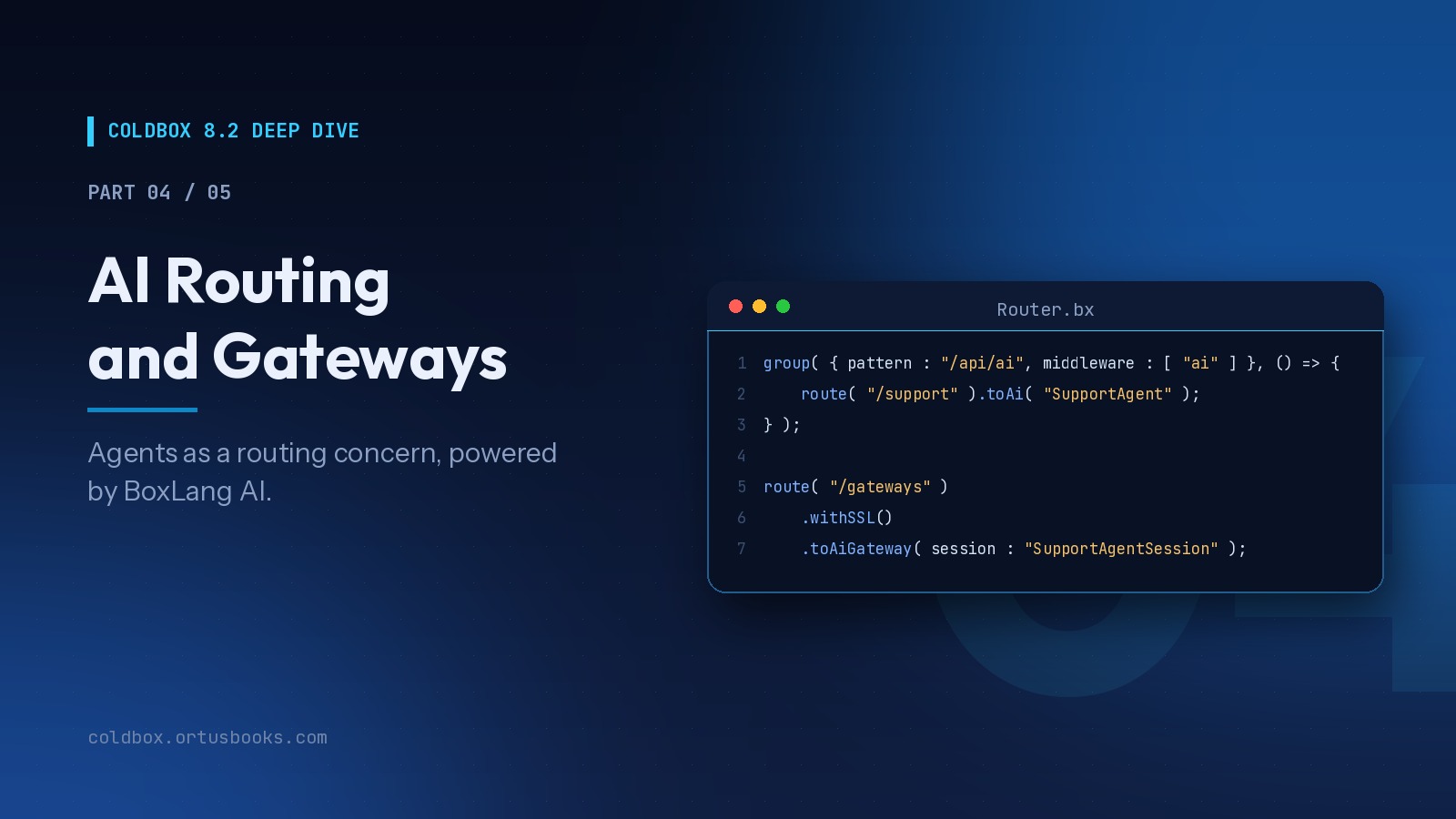
We've been building AI into the core of ColdBox since 8.0, because the applications teams are asked to build have changed. They talk to models, stream answers, expose tools to other AI systems, and increasingly host agents that act on behalf of users. None of that should require bespoke plumbing in every project.