Blog

New WireBox Ref Card Released

Brad Wood October 09, 2013

Spread the word

Brad Wood

October 09, 2013

Spread the word


Share your thoughts

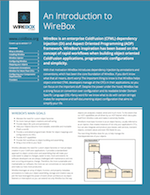
We have just released the latest installment in our series of getting started reference cards for all our *Box open source projects.  For anyone who's been waiting to jump into the WireBox AOP/DI engine, today is your day.  Here is your 6-page, full-color introduction to CFML's most handy and productive dependency injection library.  To those of you already using WireBox, this guide only covers the basics but I bet it will still teach you something you didn't know.

WireBox Ref Card

Download it, print it, read it, and sleep with it under your pillow.  Also, keep an eye on the horizon for our next ref card coming soon-- CacheBox!

Add Your Comment

Recent Entries

Introducing the BoxLang Spring Boot Starter: Dynamic JVM Templating for Spring

Introducing the BoxLang Spring Boot Starter: Dynamic JVM Templating for Spring

Spring Boot developers know the pain of evaluating view technologies. Thymeleaf is great — until you need more expressiveness. FreeMarker is powerful — until the syntax fights you. What if you could write templates in a dynamic JVM language that gives you the full power of the platform, feels natural, and requires zero setup to integrate?

Meet the BoxLang Spring Boot Starter.

Luis Majano
Luis Majano
March 13, 2026
Why Swiss Banks Are Modernizing CFML Platforms Without Rewrites

Why Swiss Banks Are Modernizing CFML Platforms Without Rewrites

The growing need to evolve legacy financial platforms safely

Many Swiss banks and financial institutions still operate important systems built on ColdFusion and CFML platforms.

These systems manage a wide range of functions, including:

  • internal banking workflows
  • reporting systems
  • client portals
  • data integration platforms
  • compliance and risk management tools

In many cases, thes...

Cristobal Escobar
Cristobal Escobar
March 13, 2026
Reactive vs Proactive ColdFusion Support: Why Waiting for an Outage Is the Most Expensive Strategy

Reactive vs Proactive ColdFusion Support: Why Waiting for an Outage Is the Most Expensive Strategy

Many ColdFusion environments operate in a reactive mode without realizing it.

Everything seems fine… until something breaks.

A server crashes.

Performance drops suddenly.

An integration stops working.

A security audit reveals missing patches.

At that point the response is urgent:

“Can someone help us fix this now?”

Emergency support is sometimes unavoidable. But when reactive intervention becomes the norm, it usually means something deep...

Cristobal Escobar
Cristobal Escobar
March 12, 2026