
Your application may be working today, but is it ready for its next release, upgrade, migration, or round of AI-assisted development?
For ColdFusion, CFML, Lucee, and BoxLang teams, quality assurance is more than finding bugs before deployment. It is about protecting the customer and operational workflows your business depends on, reducing production issues and rework, and making confident decisions about what is ready to release.
As applications continue to evolve, QA can easily become reactive. Teams may test late in the development process, focus only on happy-path scenarios, repeat manual checks, or rely on AI-generated changes without fully validating the results.
These gaps can create risks that are not always visible until they affect users, disrupt operations, or require costly fixes in production.
QA is about more than testing features
A strong QA process helps teams answer important questions before a release:
- Which customer and operational workflows cannot fail?
- What risks already exist in production?
- Which parts of the application need the most attention?
- What should be automated, and where is human review still essential?
- Is the application ready for the next release or major change?
The goal is not to test everything equally. The goal is to prioritize testing based on business impact and create a repeatable process that supports ongoing development.
Why QA matters even more for modern ColdFusion and BoxLang teams
ColdFusion and BoxLang applications often support critical business operations, long-running systems, customer portals, internal workflows, APIs, and integrations. A small issue in one part of the application can affect data, users, downstream systems, or day-to-day operations.
At the same time, teams are managing more frequent releases, legacy modernization, upgrades, migrations, new integrations, and AI-assisted development.
AI can help teams produce and change code faster, but faster development also increases the need for reliable validation. AI-generated changes still need to be reviewed, tested, and evaluated against real business workflows.
QA helps teams move faster with better evidence, not with more uncertainty.
Learn More on our Free Webinar
Common QA gaps that teams overlook
Some of the most common problems include:
- Testing only the happy path
- Testing too late in the development cycle
- Repeating manual tests without a clear strategy
- Focusing on individual features instead of complete workflows
- Automating tests without validating whether they cover business risk
- Assuming that code changes are safe because they pass a limited test
- Failing to test integrations, data flows, permissions, and edge cases
- Relying on unvalidated AI-generated changes
- Treating QA as a final step instead of an ongoing practice
These gaps do not always mean a team is doing QA incorrectly. They often indicate that the process has not evolved with the application.
Join our upcoming QA webinar
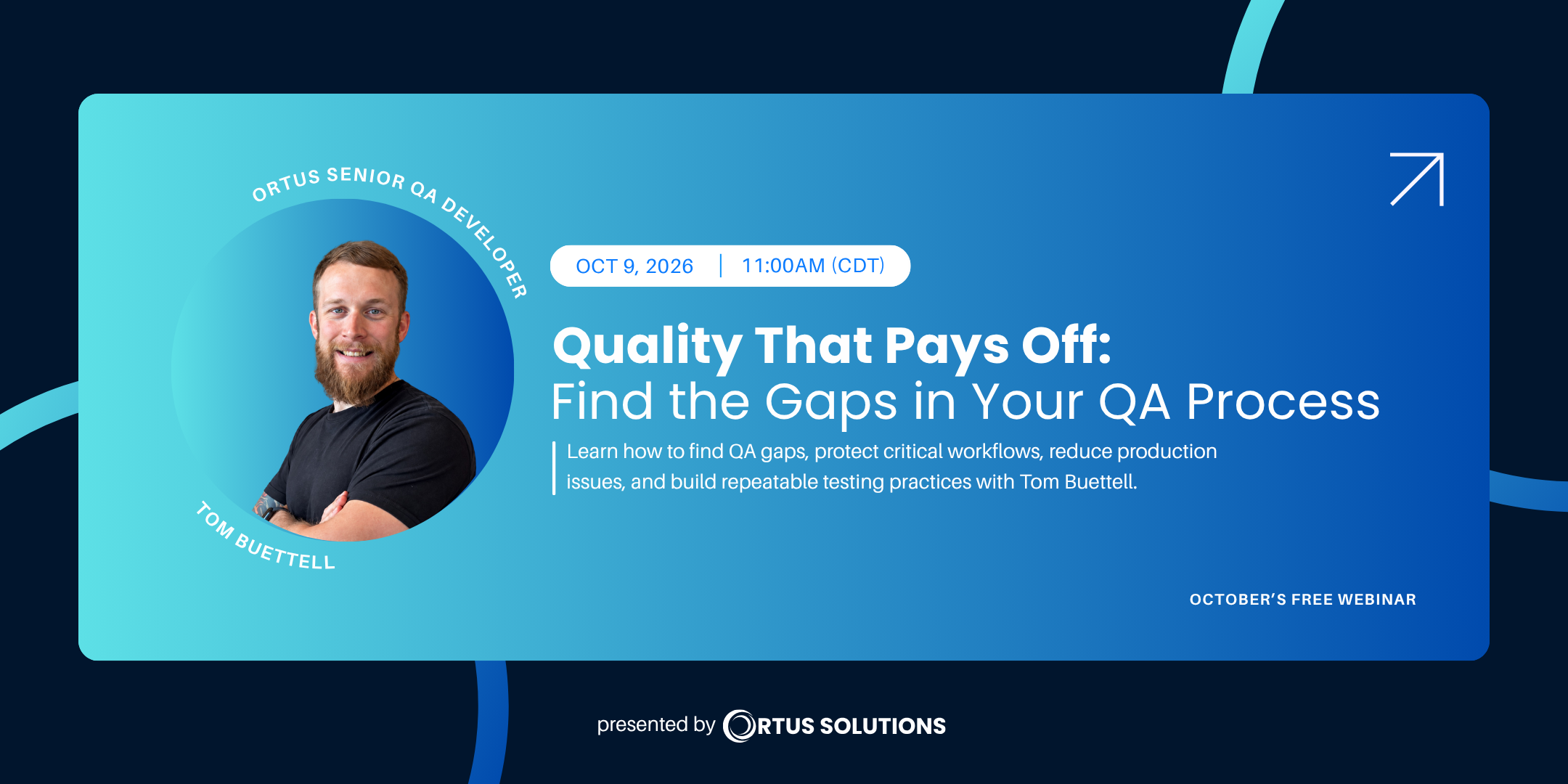
To help teams evaluate and strengthen their QA process, Ortus Solutions is hosting:
Quality That Pays Off: Find the Gaps in Your QA Process
Join Tom Buettell, Senior Quality Assurance Specialist at Ortus Solutions, for a practical session designed for teams working with ColdFusion, CFML, Lucee, BoxLang, and other modern technologies.
During the webinar, you will learn how to:
- Identify gaps in your current testing process
- Define the customer and operational workflows that cannot fail
- Recognize risks that may already exist in production
- Prioritize testing based on business impact
- Decide what should be automated and what requires human review
- Build repeatable QA practices for ongoing development and application stability
- Evaluate whether your application is ready for its next release, upgrade, or migration
Whether your team is dealing with recurring defects, limited QA capacity, increasing development pressure, inconsistent testing, or more AI-generated change, this session will help you understand what may be missing and where to improve first.
You’ll also hear practical lessons from our experience testing and supporting real-world applications, including common QA myths, practical tips for protecting your applications, and recommendations we share with our clients to help them save time and resources, reduce risk, and focus on growth with greater confidence.
Event details
- Date: Friday, October 9th, 2026
- Time: 11:00 AM (CDT)
- Location: Online
- Speaker: Tom Buettell, Senior Quality Assurance Specialist at Ortus Solutions
Build QA that supports confident releases
Quality assurance should help your team release with greater confidence, reduce avoidable production issues, and protect the workflows that matter most.
If you are not sure where your current process needs support, start by identifying the gaps that could create the greatest business impact.
Ready to strengthen your QA process?
Explore Quality Assurance Services
Join the Ortus Community
Be part of the movement shaping the future of web development. Stay connected and receive the latest updates on, product launches, tool updates, promo services and much more.
Subscribe to our newsletter for exclusive content.
Follow Us on Social media and don’t miss any news and updates:



Add Your Comment