

In our 2.6.1 release we included a new developer toolbar called the ColdBox SideBar. You can see a screenshot below:
 The SideBar enables the developer to have a floating toolbar that will assist on development. You can reinit the framework, clear the cache, clear the log files, clear some of the most used scopes like session and client, and so much more.
It also appends itself to errors when they occur, so you can easily reinitialize or search for the errors in the live docs or the forums. Yes, you can search right from the sidebar.
Another extra feature is that the links declared are all customizable, so you can customize your own sidebar according to your project, create internal or external links, or anything you like.
Another extra feature is that the sidebar is completely skinnable via css, so you can make it look pretty!! So skin it and send over your screenshots.
The SideBar enables the developer to have a floating toolbar that will assist on development. You can reinit the framework, clear the cache, clear the log files, clear some of the most used scopes like session and client, and so much more.
It also appends itself to errors when they occur, so you can easily reinitialize or search for the errors in the live docs or the forums. Yes, you can search right from the sidebar.
Another extra feature is that the links declared are all customizable, so you can customize your own sidebar according to your project, create internal or external links, or anything you like.
Another extra feature is that the sidebar is completely skinnable via css, so you can make it look pretty!! So skin it and send over your screenshots.
Blog
Recent Entries
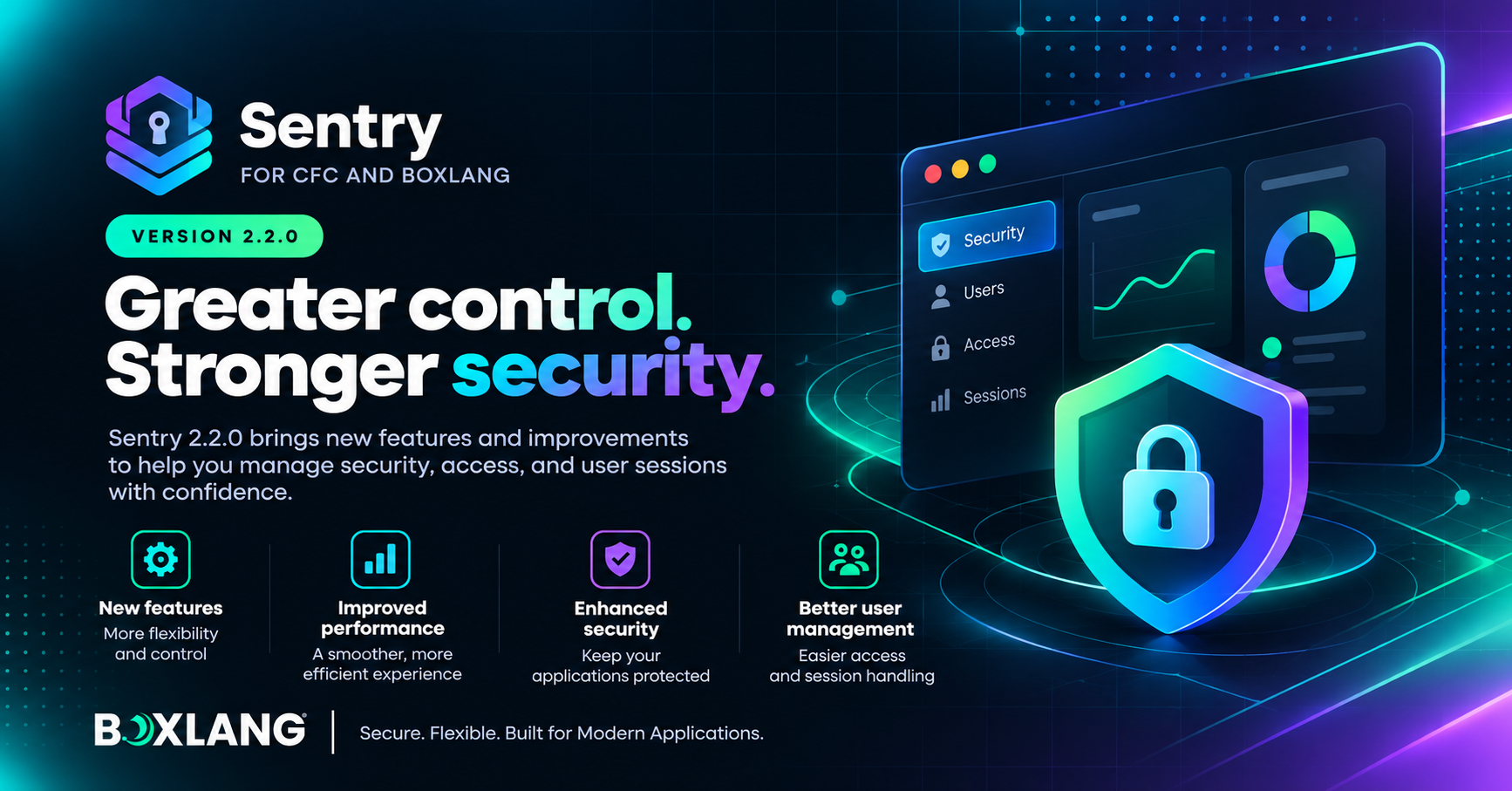
Sentry 2.2.0 Released!
Sentry 2.2.0 Released!
Sentry 2.2.0 brings tracing, structured logs, metrics, browser feedback, and a handful of welcome fixes to your CFML and BoxLang applications. There’s quite a bit packed into this minor release!
And yes, it is a minor release. Your existing error reporting continues to work, and all of the new integrations are opt-in. You can upg...

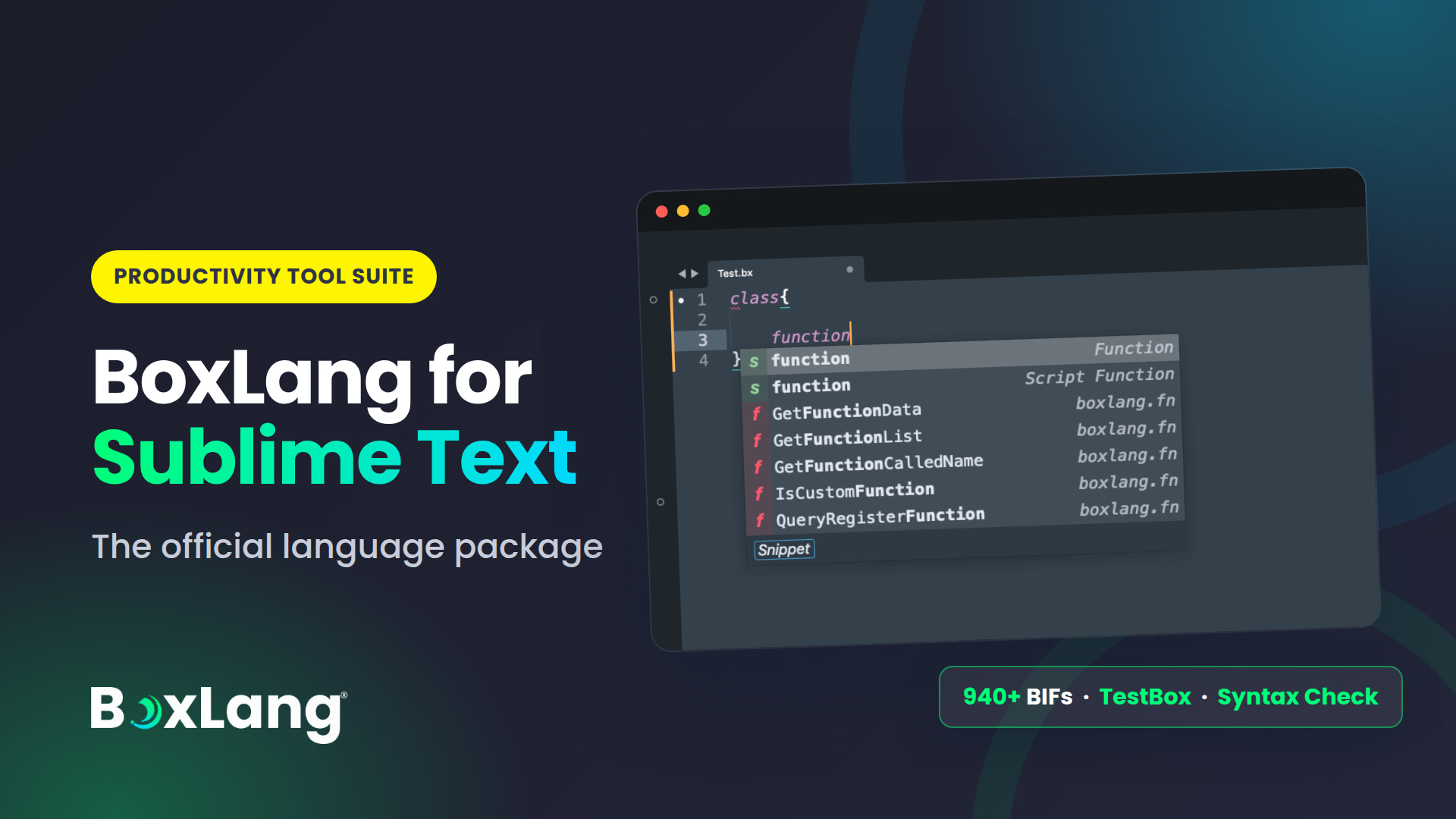
BoxLang for Sublime Text Released
Ortus Solutions today announces the official release of the BoxLang package for Sublime Text 4, the newest member of the BoxLang productivity tool suite.

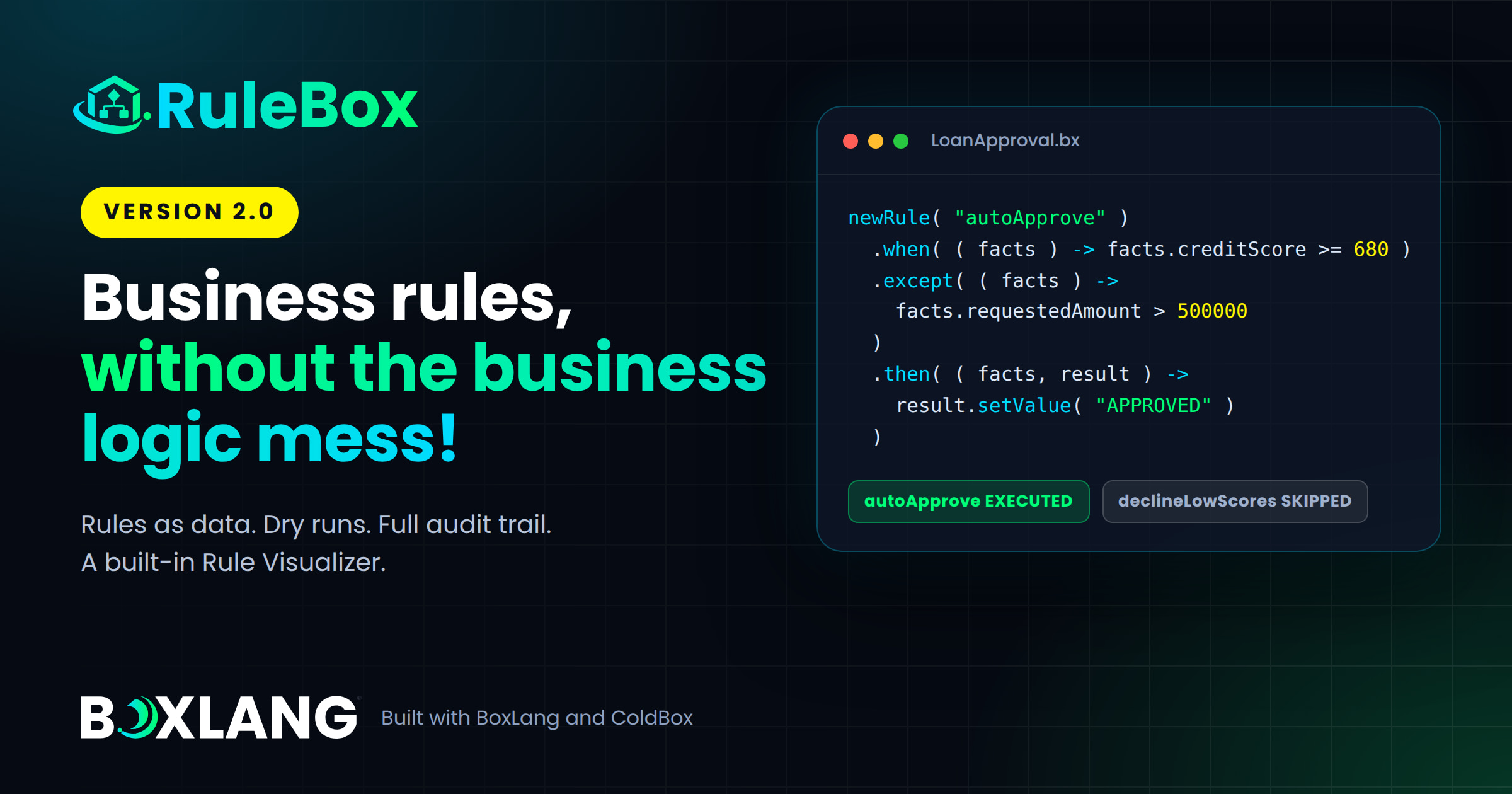
RuleBox 2.0 : a natural-language rules engine for BoxLang and ColdBox
Ortus Solutions today announces the general availability of RuleBox 2.0.0, a modern, natural-language rules engine for BoxLang and ColdBox applications. It is a BoxLang-only rewrite, and it ships with rules as data, declared rulebooks, dry runs, an audit trail, and a built-in Rule Visualizer.
Add Your Comment