
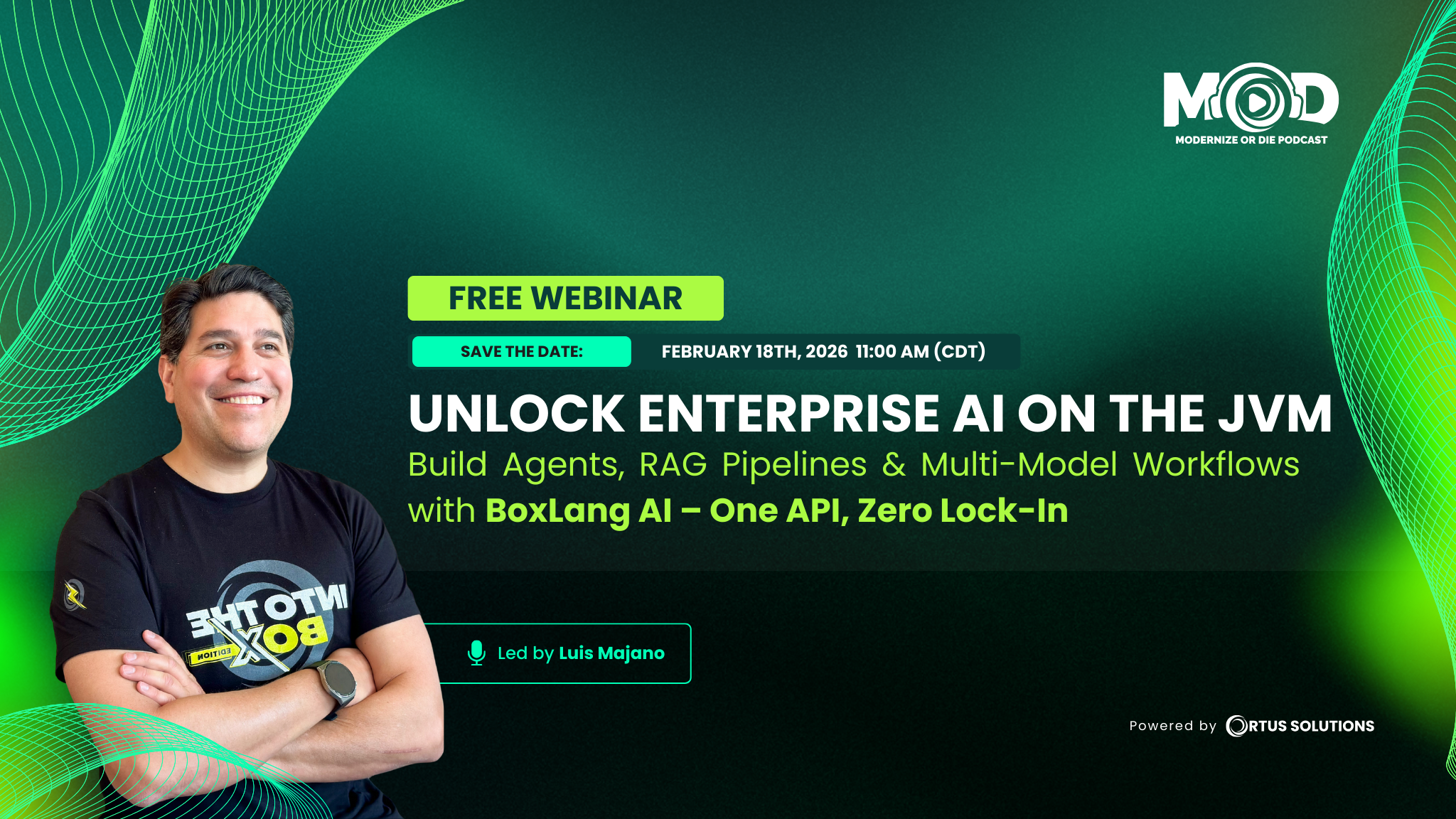
Unlock Enterprise AI on the JVM with BoxLang AI
Build Agents, RAG Pipelines & Multi-Model Workflows — One API, Zero Lock-In
Modern enterprises want to move fast with AI—but juggling different providers, SDKs, formats, and deployment models quickly becomes complex and brittle.
That’s why we’re excited to announce our upcoming webinar:
Unlock Enterprise AI on the JVM: Build Agents, RAG Pipelines & Multi-Model Workflows with BoxLang AI One API, Zero Lock-In
Led by Luis Majano
In this session, you’ll discover BoxLang AI, an open-source library that brings unified, fluent AI orchestration to the JVM ecosystem. With a single, intuitive API, BoxLang AI lets you integrate 12+ leading AI providers (including OpenAI, Claude, Gemini, Grok, Ollama, Groq, and more), switch models, or combine them into advanced workflows—without rewriting your code.
What You’ll Learn
We’ll explore production-ready capabilities designed for real-world applications, including:
- Autonomous AI Agents with memory, tools, reasoning, and sub-agents
- Advanced RAG & Vector Search with support for 10+ vector databases and 30+ file formats
- Multi-Tenant Memory & Observability using an event-driven architecture
- MCP Microservices to expose and consume AI tools as distributed services
- Local & Streaming AI via Ollama for privacy-focused or real-time experiences
- Structured outputs, custom extensions, and hybrid intelligence pipelines
You’ll also see live demos and practical examples showing how to apply these features in everyday development.
Who Should Attend
This webinar is ideal for:
- JVM & Java developers
- BoxLang / CFML developers
- Enterprise engineering teams
- AI engineers moving from experimentation to production
If you’re building chatbots, internal tools, code assistants, content generators, or full AI-driven systems, this session will show you how to reduce complexity and avoid vendor lock-in while accelerating delivery.
Register Now
Ready to transform how you build intelligent JVM solutions?
We look forward to seeing you there!
Join the Ortus Community
Be part of the movement shaping the future of web development. Stay connected and receive the latest updates on, product launches, tool updates, promo services and much more.
Subscribe to our newsletter for exclusive content.
Follow Us on Social media and don’t miss any news and updates:



Add Your Comment