
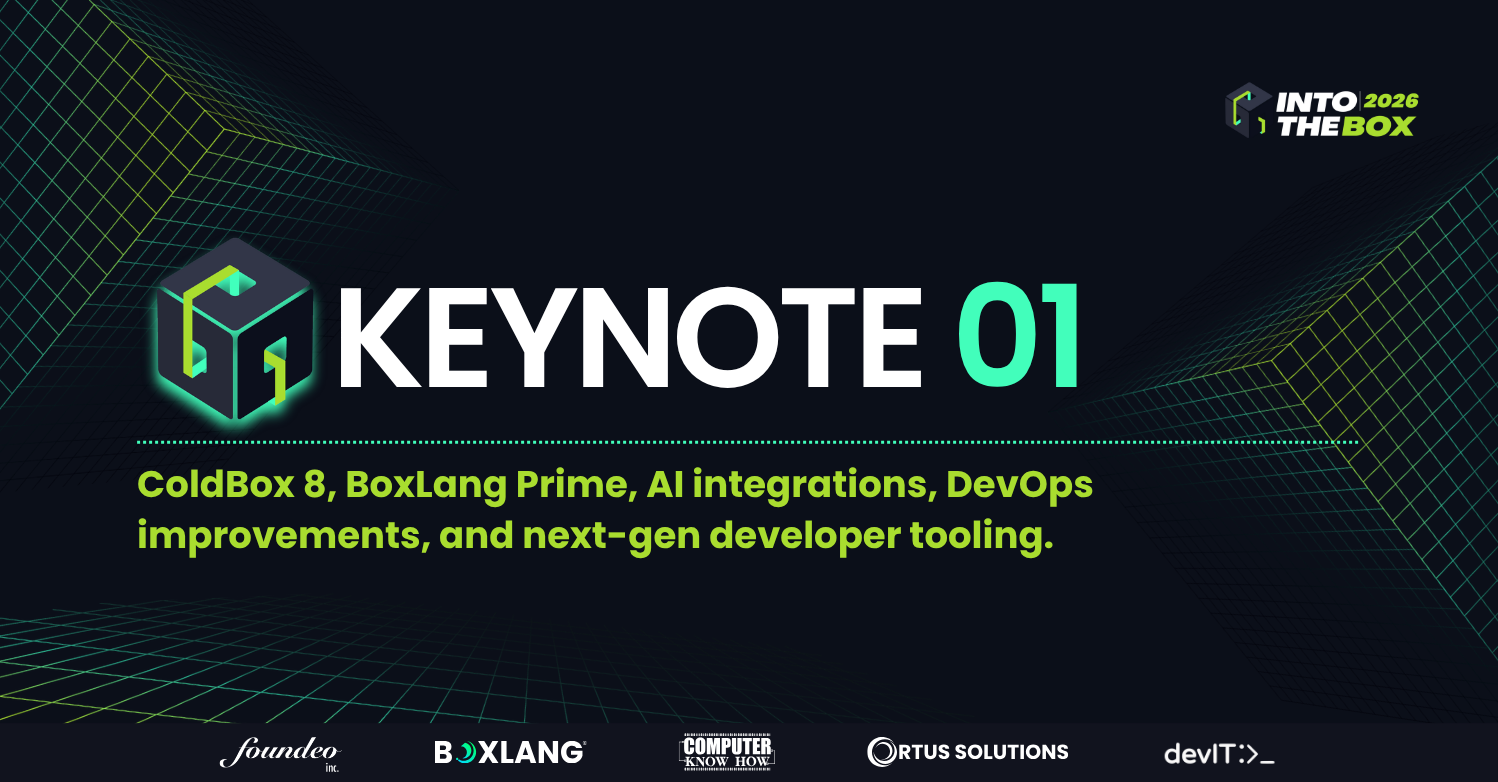
ITB 2026 Keynote Day 1 Recap
Into the Box 2026
The opening keynote at Into the Box 2026 showcased the next major leap in the Ortus Solutions ecosystem—bringing together AI-native development, modern JVM architecture, and a deeply upgraded developer experience across the stack.
From ColdBox to BoxLang, the message was clear:
The future of the platform is faster, smarter, and built for AI-first development.
🎥 Watch the Keynote
If you want the full context, demos, and live explanations from the team, watch the Day 1 keynote below:
📚 Keynote Slides & Resources
Want to dive deeper or revisit the announcements at your own pace?
You can access the full keynote slides and supporting resources here:
🔥 The Big Picture
This year’s keynote wasn’t just about features—it was about direction.
Ortus is building toward a unified developer ecosystem where:
- AI is built into the framework, not bolted on
- Applications are cloud-native by default
- Tooling understands your app in real time
- Developers move faster with less complexity
Everything announced pointed toward one goal:
Make building modern applications on the JVM radically simpler and smarter.
🚀 ColdBox 8: A Major Leap Forward
ColdBox continues its 20-year evolution with one of its most significant upgrades yet.
ColdBox 8 tightens its integration with BoxLang and introduces a more adaptive, intelligent runtime experience.
Key highlights:
- Native BoxLang “Prime” support
- AI-native routing and runnables
- Modular architecture improvements
- Virtual threading support for performance scaling
- Enhanced dependency injection system
- Faster bootstrapping and startup times
- Stronger Java interoperability
- Expanded observability and debugging tools
ColdBox can now automatically detect CFML, BoxLang, or hybrid environments making multi-runtime applications seamless.
With 720+ modules, the ecosystem continues to be one of the most mature in the JVM/CFML world.
🤖 AI-Native Development is Now Real
One of the most exciting shifts in the keynote was the introduction of AI-native development patterns inside ColdBox.
Developers can now build AI-powered features directly into their applications without complex orchestration layers.
What’s now possible:
- Native AI endpoints through routing
- AI chat interfaces in minutes
- Built-in embeddings and AI workflows
- Streaming AI responses out of the box
- Direct MCP server integrations
ColdBox “AI runnables” automatically expose standardized endpoints like:
- invoke
- stream
- batch
- info
This dramatically reduces boilerplate and accelerates AI feature development.
🧠 CB-MCP: Your App, AI-Readable
CB-MCP introduces a powerful new idea: Your application should be understandable and operable by AI tools.
With CB-MCP, developers and AI agents can interact with live applications to:
- Inspect routes and architecture
- Run diagnostics in real time
- Execute tests
- Analyze cache and system state
- Interact conversationally with the system
This is a major step toward AI-operable backend systems.
📦 BoxLang + CommandBox: Lighter, Faster, Cloud-Ready
The evolution of BoxLang and CommandBox continues pushing toward cloud-native simplicity.
Key updates:
- New BX CLI experience
- Smaller, optimized runtimes
- Faster container startup times
- Reduced Docker image sizes
- Lower security/CVE footprint
- Improved CI/CD integration
- Smarter package locking system
The direction is clear: lighter deployments, faster startup, and simpler infrastructure.
🧪 Developer Experience First
TestBox continues evolving with a strong focus on developer velocity:
- Streaming test execution
- Better CLI workflows
- VS Code integration improvements
- Parallel testing enhancements
- AI-assisted debugging workflows
Everything is aimed at shortening feedback loops and improving productivity.
⚡ Ecosystem Momentum: ContentBox & Beyond
ContentBox continues modernizing with:
- Faster admin experience
- Reactive AlpineJS UI improvements
- Improved media handling
- Headless CMS enhancements
- Upcoming AI integrations
Other ecosystem tools (QB, Quick, CBWire, CBQ, PassKeys, CBSSO) are also evolving toward full BoxLang compatibility and modern architecture patterns.
🔥 Final Takeaway
Day 1 of Into the Box 2026 made the vision extremely clear:
The Ortus ecosystem is evolving into:
- An AI-native development platform
- A cloud-first JVM ecosystem
- A developer experience–driven toolkit
- A unified runtime with BoxLang at its core
This is not incremental change—it’s a platform-level shift in how applications are built, deployed, and understood.
👉 Want More?
Watch the full keynote above to see live demos, deeper explanations, and the vision directly from the team.
Subscribe to our newsletter for exclusive content.
And stay connected with the ecosystem here:



Add Your Comment