Blog

Getting started with ForgeBox

Curt Gratz February 18, 2015

Spread the word

Curt Gratz

February 18, 2015

Spread the word


Share your thoughts

With CommandBox we have learned how easy it is to install projects/modules/interceptors/etc from ForgeBox.  But what if what you want doesn't exist? Or what if you have an existing project you want available to install quickly and easily with CommandBox?  We believe strongly in the community and the power of Open Source, so we encourage you to contribute.  Get that project/module/whatever out there and share it with the world.  Use community to better it and yourself as you learn from the Open Source process.

So, back to ForgeBox, how do you get that shiny new thingamajig you just open sourced into ForgeBox so it can be installed through CommandBox quickly and easily?

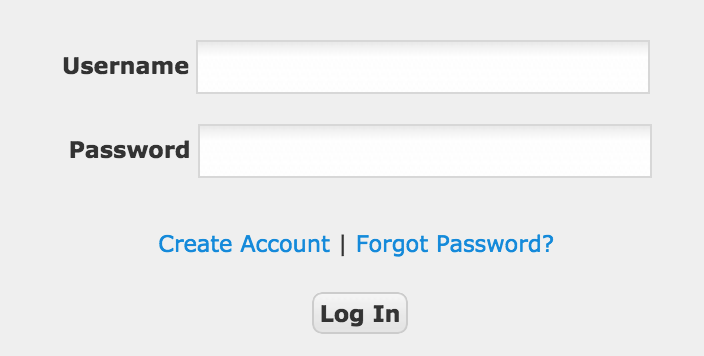
Step 1) Create an account...
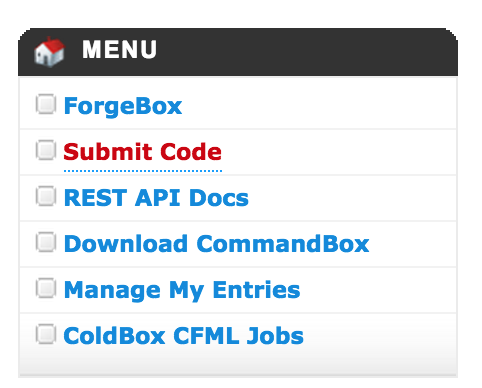
Step 2) Create a ForgeBox Entry by clicking on Submit Code
Step 3) Fill out the form defining your entry.

There are a few important things to note when filling out the form to submit an entry.

  • Pick the appropriate Category
  • Be sure the download URL points to a ZIP of your project/module/etc
  • Make your description/Readme as detailed as possible

That is it.  In 3 easy steps you can have your project shared out on ForgeBox, available for download and more importantly available for install via CommandBox.
Add Your Comment

Recent Entries

12 Days of BoxLang - Day 4: TestBox

12 Days of BoxLang - Day 4: TestBox

Today we’re celebrating one of the most exciting new additions to the BoxLang ecosystem:

the TestBox BoxLang CLI Runner — a fast, native way to run your TestBox tests directly through the BoxLang Runtime. ⚡

No server required. No CommandBox needed. Just pure, ultra-fast BoxLang-powered testing from the command lineon Windows, Mac, and Linux.

If you’re building modern applications with BoxLang — web apps, CLIs, serverless functions, Android apps, or OS-level utilities — this new feature gives you a unified, flexible testing workflow you can run anywhere.

Victor Campos
Victor Campos
December 13, 2025
12 days of BoxLang - Day 3: SocketBox!

12 days of BoxLang - Day 3: SocketBox!

As BoxLang continues evolving into a modern, high-performance, JVM-based runtime, real-time communication becomes essential for the applications we all want to build: dashboards, collaboration tools, notifications, live feeds, multiplayer features, and more.

That’s where SocketBox steps in — the WebSocket upgrade listener built to work seamlessly with CommandBox and the BoxLang MiniServer. ⚡

Today, for Day 3, we’re highlighting how SocketBox supercharges BoxLang development by giving you fast, flexible, and framework-agnostic WebSocket capabilities.

Maria Jose Herrera
Maria Jose Herrera
December 12, 2025
12 Days of BoxLang - Day 2: CommandBox

12 Days of BoxLang - Day 2: CommandBox

BoxLang + CommandBox: The Enterprise Engine Behind Your Deployments

For Day 2 of our 12 Days of Christmas series, we’re diving into one of the most powerful parts of the BoxLang ecosystem: CommandBox the defacto enterprise servlet deployment platform for BoxLang.

If BoxLang is the language powering your applications, CommandBox is the engine room behind it all. ⚙️

Victor Campos
Victor Campos
December 11, 2025