Blog

Brad Wood

March 27, 2014

Spread the word


Share your thoughts

REST APIs are a popular and easy way to add HTTP endpoints to your web applications to act as web services for third parties or even other internal systems. REST is simpler and requires less verbosity and overhead than other protocols such as SOAP or XML-RPC. Creating a fully-featured REST API is easy with the ColdBox Platform. Everything you need for creating routes, massaging data, and enforcing security comes out of the box.

The ColdBox MVC Platform has had excellent support for REST APIs for years and is a great choice for your next project.  Using ColdBox automatically affords you many productive features, including (but not limited to) the following:

  • Flexible and simple URL Routing
  • No XML configuration!
  • Easy use of conventions
  • Built-in data rendering
  • Easy control of HTTP verbs and status codes
  • Error Handling
  • Security
  • Caching

Have a read through our ColdBox REST documentation: Building ColdFusion Rest APIs

Also check out our companion project that helps you write and test REST APIs called ColdBox Relax: ReSTful Tools For Lazy Experts
 

Add Your Comment

(2)

Mar 28, 2014 16:44:10 UTC

by Henry Ho (@henrylearn2rock)

Question, can you how does ColdBox REST support compare to CF10's RESTFul API support?

Would CB's be easier to test / reload vs CF10's implementation?

Mar 28, 2014 16:55:55 UTC

by Luis Majano

Henry, cf10's approach to rest is very rigid in my opinion. Ours is based on MVC best practices and the other one on just creating CFCs with all kind of annotations to expose the end points. YOu have to reload configurations with cf10 and there is not one place where you can see your routing or even alias routing.

With ColdBox, we create a router file approach where you can define your URL mappings and use it not only for REST but for much more. It also allows for MVC to shine with your RESTFul application.

Me personally, I would never leverage the built-in RESTful services as it is too messy in my opinion.

Recent Entries

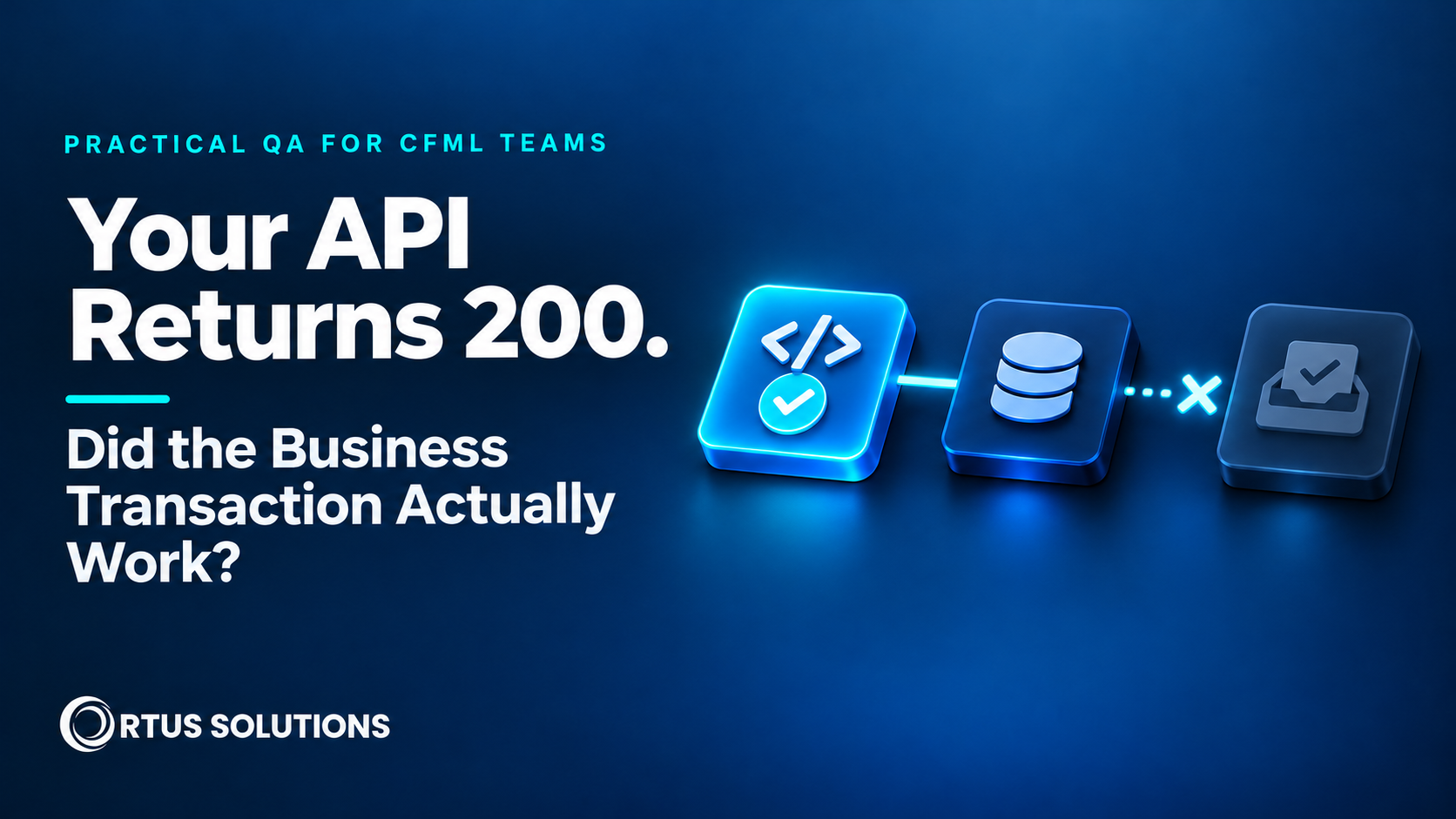
Your API Returns 200. Did the Business Transaction Actually Work?

Your API Returns 200. Did the Business Transaction Actually Work?

The customer submits an order. The portal shows a confirmation. The API returns 200 OK, and the release checks pass.

The next morning, operations asks why the order never appeared in the approval queue. Support has a ticket. A developer has to trace the order through the database and figure out whether someone can safely submit it again.

For teams maintaining a ColdFusion or Lucee application, this is a frustrating kind of release failure: the team ...

Maria Jose Herrera
Maria Jose Herrera
November 11, 2026
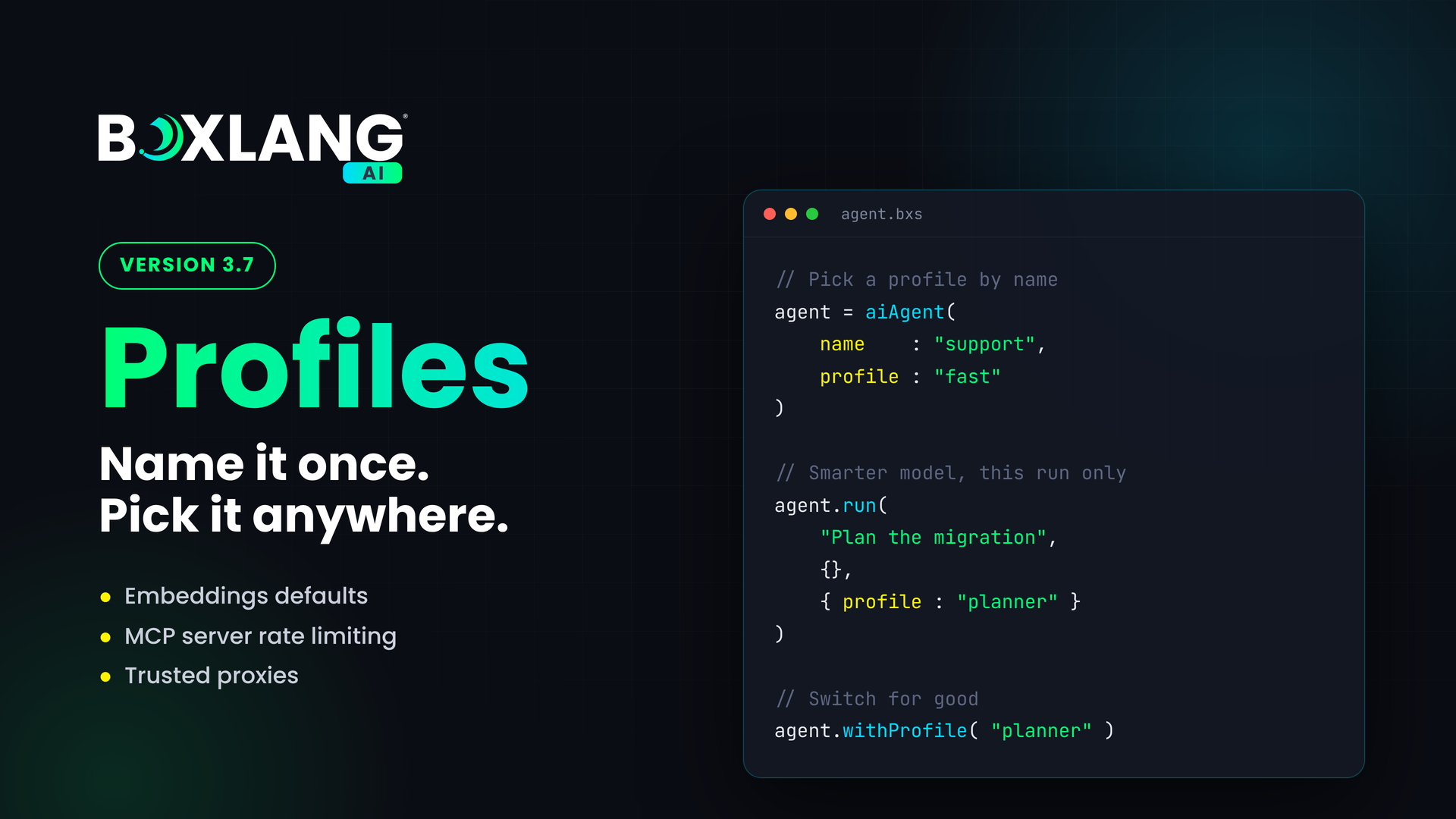
BoxLang AI 3.7: Profiles, Embeddings Defaults and MCP Rate Limiting

BoxLang AI 3.7: Profiles, Embeddings Defaults and MCP Rate Limiting

Ortus Solutions announces the release of BoxLang AI 3.7. Name a provider, model, params and API key once, then pick it by name for a call, an agent, or a single agent run. Embeddings get their own defaults, MCP servers you build get rate limiting and trusted proxies, and a handful of important fixes land along the way.

Luis Majano
Luis Majano
November 05, 2026
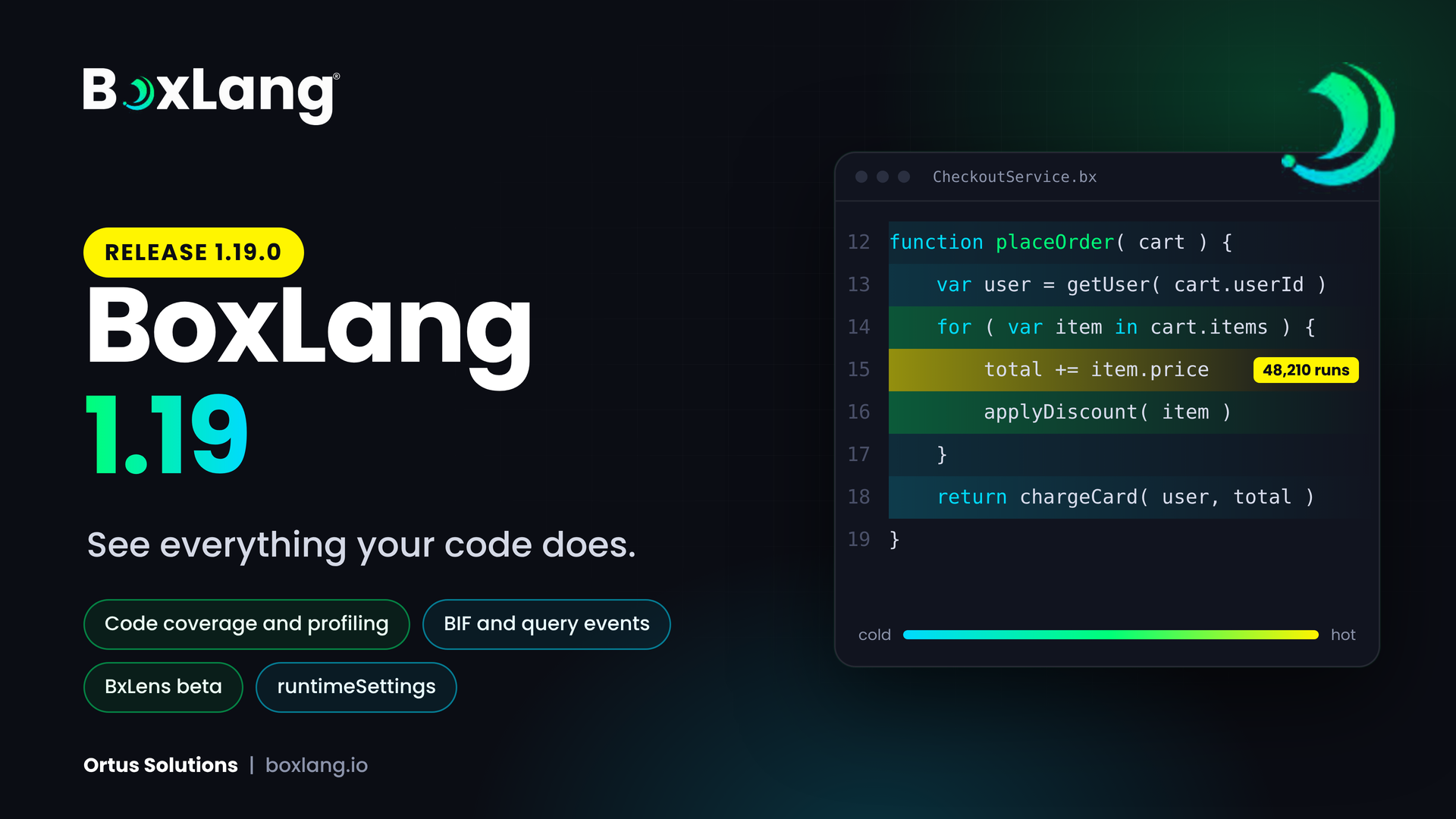
BoxLang  1.19.0: See Everything Your Code Does

BoxLang 1.19.0: See Everything Your Code Does

Ortus Solutions today announces the release of BoxLang 1.19.0, the software productivity platform for building, modernizing and running applications, with developers and AI agents working together. This release is about observability: built-in code coverage and execution profiling, the missing post-invocation events for BIFs, and new query and transaction events, and it pairs with the new BxLens beta, the debug bar and ops console that exposes hotspots and bytecode profilers. It also adds your own global settings in boxlang.json, static method interception, raw binary HTTP streaming and a lot of hardening across JDBC, Java interop and CFML compatibility.

Luis Majano
Luis Majano
November 05, 2026